Keep your pods on track with Kubernetes scheduler monitoring.
Greetings!
In Kubernetes, the scheduler decides which node each workload runs on. When scheduling slows down, pods queue up, workloads stall, and performance across the cluster degrades. Without visibility into scheduler behavior, diagnosing bottlenecks is frustrating and time-consuming.
Site24x7 now helps you watch the Kubernetes Scheduler closely, showing you how tasks are picked, waits, and delays.
Key benefits of Kubernetes scheduler monitoring
Here's what you gain with Site24x7's scheduler monitoring:
- Detect scheduling bottlenecks early: Watch pending and unschedulable pods as they happen so you can provision compute resources before the application delays build up.
- Monitor scheduling latency: Track how long scheduling takes, including any delays that impact pod initialization times.
- Track queue performance: Monitor active queue depth, retry queue count, and backoff queue size to better understand the scheduling pipeline.
- Monitor scheduling attempts: Track successful vs. failed scheduling algorithms to quickly spot recurring taints, toleration mismatches, or restrictive affinity rules.
- Keep the scheduler cache healthy: Check the cache size and age to ensure scheduling uses the latest cluster information.
- Reduce mean time to resolution: Correlate metrics such as scheduling latency, queue depth, and node health to speed up root-cause analysis.
Getting started
Setting up scheduler monitoring in Site24x7 takes just a few steps and requires no additional agents beyond your existing Kubernetes monitoring setup.
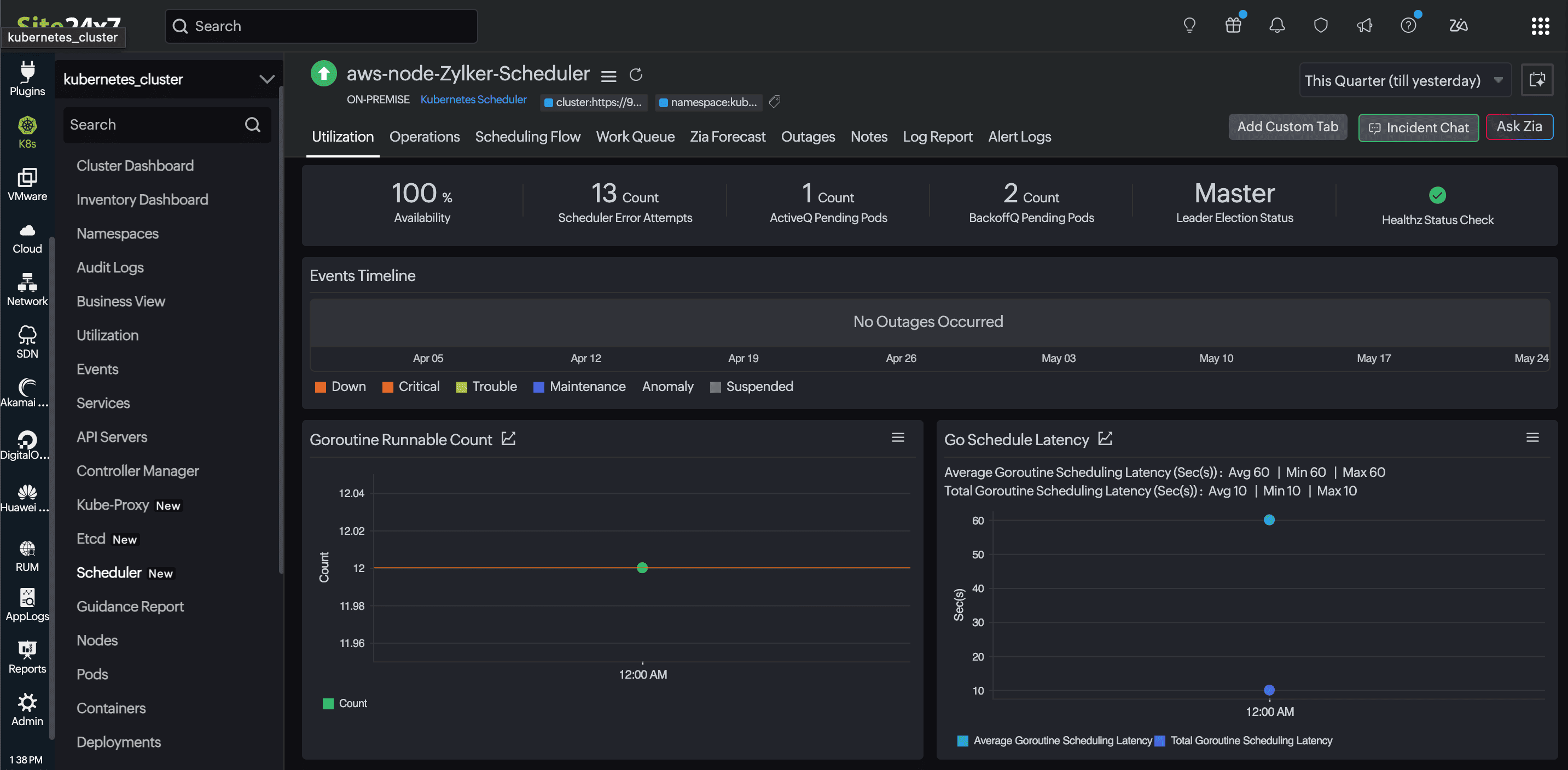
With Kubernetes Scheduler monitoring in Site24x7, you can proactively detect scheduling delays, investigate queue backlogs, and ensure every pod is placed on the right node before your users are affected.
Do you have any thoughts or questions? Feel free to share them in the comments below!
Warm regards,
The Site24x7 team